
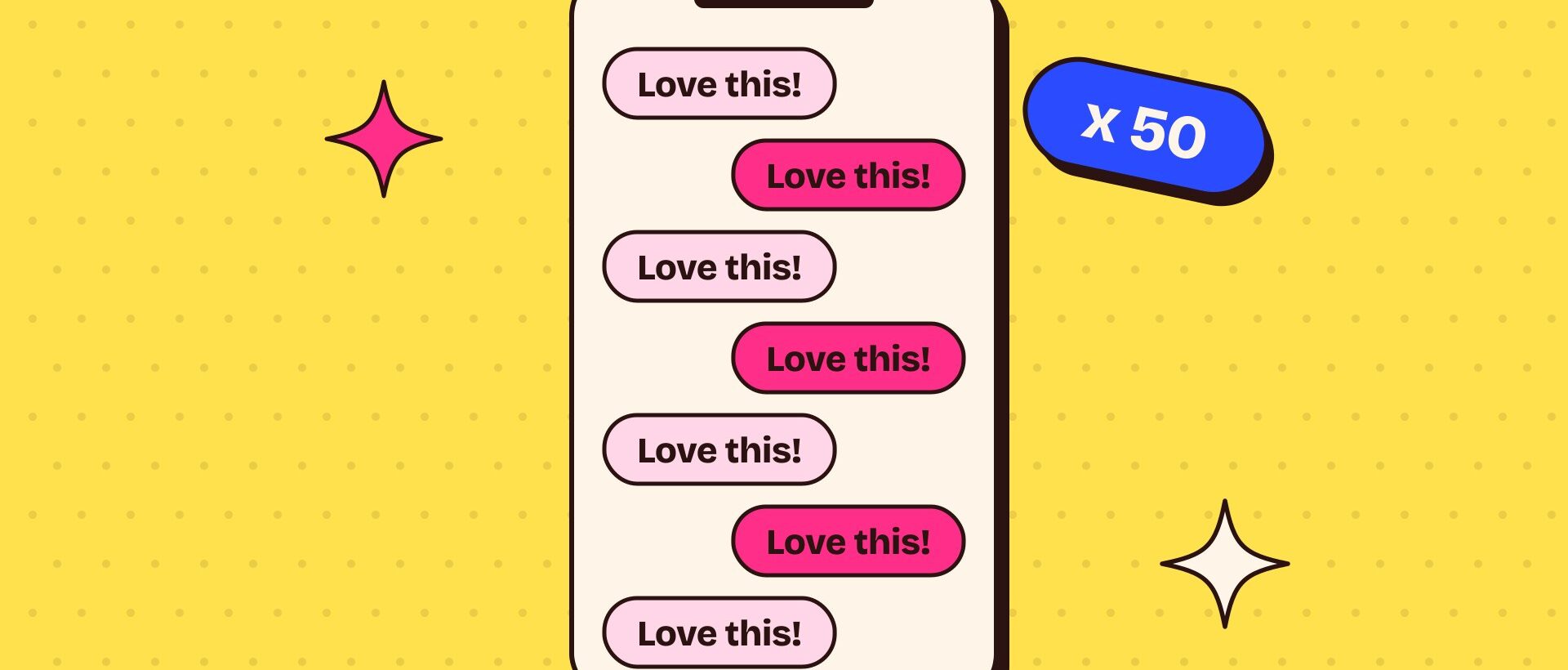
If you’ve never been invited to one, here’s how an engagement pod works. A group of people, usually in a chat on Instagram, WhatsApp or Telegram, agree to like and comment on each other’s posts as soon as they go up. The idea is that all that early activity tells the algorithm your post is popular, so it shows it to more people.
On paper, it sounds clever. In practice, engagement pods are just group chats with worse vibes. And from where I sit, managing social content every day, they cause more problems than they solve.
Is the engagement real?
The whole point of engagement is that it tells you something. A comment from a real customer means your post landed. A save means someone found it useful. A share means they thought a friend needed to see it.
Pod engagement tells you nothing, because it was always going to happen. “Love this! 🔥” from someone who sells candles in another country, on a post about your accountancy firm, isn’t feedback. It’s noise. And once your numbers are full of noise, you can’t tell what’s actually working any more.
If you have to arrange your engagement in advance, it isn’t engagement.
Do engagement pods reach the right people?
Platforms work out who to show your posts to partly by looking at who interacts with them. If most of the people liking and commenting are other pod members, with different businesses, different audiences and often different countries, you risk teaching the platform that your content is for them. Not for your customers.
So even if your reach goes up, it can go up in all the wrong directions. More views from people who’ll never buy, fewer from the people who might.
The platforms don’t like it
Instagram’s rules are clear that it doesn’t want inauthentic activity, which includes coordinated likes and comments designed to game the system. It doesn’t always catch pods, but it’s a risk, and it isn’t one worth taking with the account your business relies on. Building on something the platform is actively trying to stop is building on sand.
It’s exhausting
This is the bit nobody mentions when they invite you in. Pods come with rules. Comment on everyone’s post within an hour. Comments must be at least four words. Miss too many and you’re out. Suddenly you’re spending your lunch break writing “So true, thanks for sharing!” on twenty posts you didn’t really read, instead of doing the work that actually grows your business.
Social media managers have enough on their plates. Adding a second unpaid job of commenting on strangers’ content isn’t a growth hack. It’s a burnout hack.
It can make your numbers lie to you
There’s another problem that sneaks up on you. Reports start looking great. Engagement rate up, comments up, everything green. Then someone asks the obvious question: so why haven’t enquiries gone up too? Pod numbers can make a strategy look like it’s working when it isn’t, which means you keep doing the wrong thing for longer.
Honest numbers are far more useful, even when they’re smaller. A modest engagement rate from real customers tells you exactly what to make more of, and exactly what to stop.
What to do instead
The thing pods are trying to fake, real people interacting with you early and often, is completely achievable without one. It just takes a bit longer and feels a lot better.
- Reply to every comment. Properly, with a real answer or a question back. Conversations bring people back to your posts.
- Comment on other people’s posts, genuinely. Customers, local businesses, people in your industry. Say something useful. People notice and come and look at your profile.
- Ask a real question. End a post with something people actually want to answer, not “thoughts?”
- Involve your team. Your colleagues sharing and commenting on your company posts is genuine, because they actually work there. Just keep it natural.
- Make content worth saving. Tips, checklists and how-tos get saved and shared without anyone being asked.
Community, not a comment quota
Here’s the thing. Supporting other marketers is brilliant. Cheering on a friend’s launch, sharing a post you genuinely loved, introducing someone to a person they should know. That’s what community is, and it’s what we’re all about at The Social Cuppa. The difference is that it’s real. Nobody’s keeping score, and nobody gets kicked out for missing a Tuesday.
So if you’re in a pod, it might be time to leave the chat. Keep the friends, lose the rules, and put that time into conversations with people who might actually become your customers.


2 comments