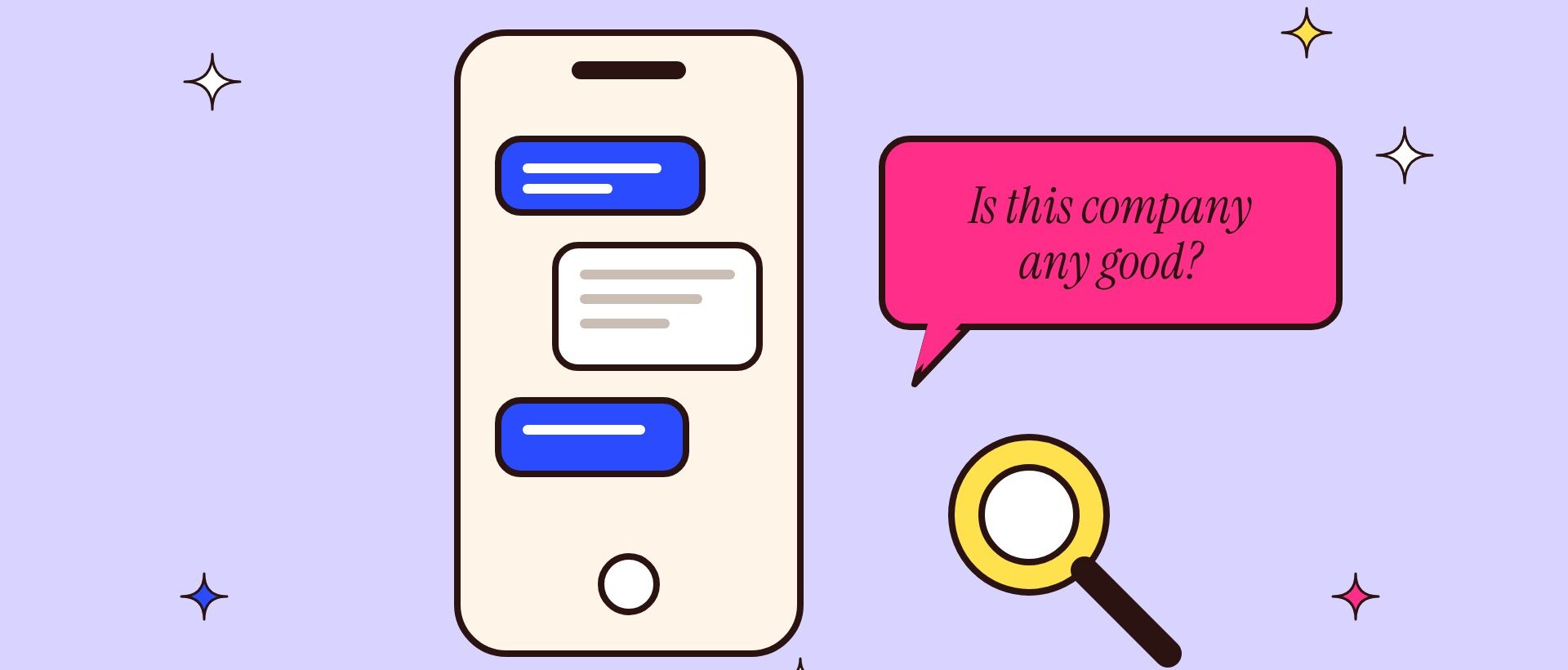
Someone might find you on Google, visit your website and then ask ChatGPT, “Is this company any good?” By that point, they already know who you are. They’re checking whether they’re comfortable buying from you. That’s the bit I’ve become interested in, because you can see the website visit in your analytics, but you can’t see what they were told afterwards.
I’ve spent 18 years in SEO, and I’d put this among the biggest shifts I’ve worked through. Not because search is dying (it isn’t) but because part of the buying decision now happens somewhere you can’t see.
What 3,400 people told me
Since May this year, with permission from several of my clients, I’ve been surveying their audiences. So far, 3,400 people across e-commerce, services and software have answered one question: do you use AI to reassure yourself about a brand, product or service before deciding whether to buy or go ahead?
51% said yes.
It’s an initial survey of my clients’ audiences rather than a national panel, so I hold it lightly. But half is hard to ignore. These aren’t only people discovering new businesses through AI. They’ve seen your van, your shop, your ad, your website, and then they ask an AI whether they can trust you before they commit.
That check leaves no trace in your analytics. The customer who read a glowing AI answer about you and the one who read a lukewarm answer about you look identical in your numbers: one turns up, one doesn’t.
So I started measuring it
You can’t manage what you can’t see, so for my clients I track what the AI platforms actually say about them, every day.
Here’s what that looked like for one of them, a fashion e-commerce brand I can’t name. At the start of the year, it was mid-table in its market for AI visibility. When someone asked an AI assistant for recommendations in its category, the brand appeared in fewer than a quarter of answers, on every platform I tracked. Its competitors were being recommended instead.
To the brand’s credit, it moved early. We started planning for AI search at the beginning of the year, before most of the market treated it as a channel. The tracked work ran from July to October: 365 real shopper questions, put to five AI surfaces (ChatGPT, Perplexity, Gemini, Google’s AI Overviews and AI Mode) every single day.
Three months later:
- When an AI answer in this market names or links a website (I call that a citation), this brand now takes 33.8% of the citations shared between it and its five closest competitors. That’s 17,820 of 52,770 citations over 90 days, making it the most-cited brand in its market, more than double the next one.
- AI assistants now cite 188 different pages on its site, up from around ten.
- When people ask about the brand by name, 95% of answers now include it.
One honest note: the daily tracking only began when the work did, so the starting picture is reconstructed from the earliest checks rather than a clean export. That’s why I say “around ten” and “more than double”. I’d rather under-claim than invent precision.
What actually moved it
None of this was a trick, and that’s the point. Five things did the work:
- Measure what AI actually says, daily. Not once a quarter. Answers change constantly, and you can’t close a gap you haven’t seen.
- Cover the whole buying journey. Questions people ask when they first look, when they compare, and when they’re ready to buy. The brand was strong in some places and invisible in others, and the data showed exactly where to spend the effort.
- Check the sentiment before chasing visibility. If AI is saying something negative about you, being mentioned more often makes things worse. Here there was nothing to repair, so everything went on being seen more.
- Make the website easier to cite. Clear pages that genuinely answer the questions people ask. AI systems lift and reference pages the same way a careful reader would. If the answer isn’t on your site, they’ll cite someone else’s.
- Show up in the sources AI reads. The tracking showed which external sites the assistants leaned on for this market. We made sure the brand was present and accurate in those places, not just on its own website.
If that list sounds like good marketing fundamentals (accurate information, a solid reputation, content worth referencing) that’s because it is.
The platforms are new. The work underneath is not.
What I can actually measure
Google doesn’t separate AI-driven visits from ordinary search traffic, so nobody can tell you precisely what revenue AI answers produced. Anyone promising you an exact return from “AI optimisation” is guessing. What I can show is the correlation: the brand’s most-cited page also earned 33,971 Google impressions and over 6,000 visits in the same 90 days, and ranks in Google’s top ten for 84 of its 97 tracked keywords. Strong pages win in both places. That’s the pattern I see across accounts.
What you can do this week
You don’t need an agency to take the first step. You need ten minutes.
- Ask the assistants about your market. Open ChatGPT and ask the question your customer would ask: “best [what you do] in [your area]”, “is [your brand] worth it”. Try Perplexity and Google too.
- Read the answers like a customer. Are you there at all? Who is? Is what’s said about you accurate?
- Look at the sources. Most AI answers show where the information came from. If the same review site or directory keeps appearing and your profile there is thin, outdated or missing, that’s your first job.
- Fix the boring things. Consistent business information everywhere you’re listed, reviews you actually respond to, website pages that properly answer the questions people ask. This is what AI answers are built from.
And one thing I’d gently push back on: don’t let anyone tell you this replaces everything you’ve done before. The businesses showing up well in AI answers are, overwhelmingly, the ones that did the fundamentals properly. This is a new place to be visible, and a new thing to measure, not a reason to start again.
Ask the question a customer would ask before buying from you. Read the answer and see if it’s accurate. That’s where I’d start.